

The number of new reactor designs under development has grown dramatically in recent years. Many of these are aimed at supporting the massive energy growth required by data centers and artificial intelligence. I witnessed this remarkable groundswell during my recent visit to CERAWeek in Houston, where many new reactor vendors presented their microreactor and small modular reactor (SMR) designs. These presentations naturally drew the attention of high-tech industries and potential investors.
While this momentum is extremely positive and exciting, I observed a potential friction point. The high-tech industries driving interest in some of these new reactors often operate with a culture that naturally differs from traditional nuclear safety culture. The opportunity is real, but so is the challenge. To meet the energy needs of AI and data centers, the high-tech drive for speed must be balanced with the rigorous testing, licensing discipline, and questioning attitude that have long defined the nuclear industry.
The Role of Nuclear Safety Culture
Most people working in the nuclear power industry are familiar with the "Traits of a Healthy Nuclear Safety Culture." This industry gold standard was developed by the Institute of Nuclear Power Operations (INPO). A copy of it sits on the desk or laptop of most employees in the nuclear field. The attributes of a nuclear safety culture are defined and regularly reinforced throughout our entire industry.
An inkling of this culture clash was revealed in a recent letter from the U.S. Nuclear Regulatory Commission (NRC) Advisory Committee on Reactor Safeguards (ACRS). They wrote to the Chairman of the NRC regarding lessons learned from their reviews of new reactor applications. The letter described several application deficiencies and offered important advice to new reactor applicants.
The ACRS noted that some applicants are changing or even deleting principal design criteria with insufficient technical justification. This behavior may arise from an applicant’s perspective that a new design is intuitively and inherently safe. However, embedded in nuclear safety culture is a questioning attitude. This attitude requires that safety be demonstrated through a rigorous review process, precisely as outlined in Regulatory Guide 1.232.
The ACRS also noted that some applicants are submitting licensing topical reports that are merely future plans without technical details. Although this may appear to demonstrate rapid progress, they cite that it only ties up valuable NRC resources. They also indicated that while computational methods have advanced, reliable data remains essential for verifying key safety aspects.
A strong nuclear safety culture values the role of component and integral system tests to provide a reality check to computer codes. These tests remain an essential part of the NRC acceptance review. There are many other noteworthy observations in the ACRS letter. It is definitely worth a read.
So, why exactly does this culture clash exist?
Divergent Risk Philosophies
The culture clash between the traditional nuclear power industry and the modern high-tech sector stems from very different approaches to risk. The nuclear industry operates on a foundation of conservatism to ensure public safety. In stark contrast, high-tech firms prioritize rapid iteration and transformative growth.
In the technology sector, companies often embrace a "fail fast" mentality. This is particularly true in research and development, where breaking things is seen as a way to foster rapid learning and innovation. This approach may be suitable for a test reactor in a highly controlled laboratory environment, however, the subsequent transition from test reactor to commercial nuclear plant deployment still requires an in-depth NRC safety review and licensing process.
The nuclear industry is inherently cautious. We prioritize safety over all competing goals. Nuclear organizations often over-design systems and actively minimize technical risks to avoid the consequences of potential failure. Tech companies typically build simple versions of products, iterating and perfecting them over time. You simply cannot release a "beta version" of a commercial nuclear reactor, hoping to fix bugs as they arise in real time.
Differing Approaches to Rules and Procedures
Another major friction point involves how each industry views rules and procedural frameworks. Nuclear safety thrives on being highly procedural and rules-driven. Strict adherence to protocols guarantees operational predictability and public safety. However, this environment provides little room for the rapid risk-taking necessary for high-tech innovation.
Nuclear operators often focus on strict compliance to satisfy regulators. Every action is documented, verified, and checked against established regulations and quality assurance requirements. The high-tech industry generally prefers performance-based oversight. Tech leaders often view rigid procedures as undue interference in management and product development. They want to move quickly and reduce procedural friction, which runs counter to the careful, methodical nature of nuclear licensing.
Innovation and Adoption Speeds
The sheer speed of expected progress differs wildly between Silicon Valley and the nuclear sector. Historically, nuclear innovation has been incremental and deliberate. For example, it took over a decade for parts of the industry to transition from paper-based work to digital control systems.
Tech culture is built for hyperscale growth. These companies expect rapid adoption of new tools and instantaneous scaling. When tech leaders look at the timeline for deploying a nuclear plant, they are often shocked by the lengthy regulatory and construction schedules.
Furthermore, there is sometimes resistance to new technology in the nuclear space. New manufacturing methods like 3D printing might actually improve safety and efficiency. However, these innovations face long adoption cycles in the nuclear sector because they represent a departure from established, historically proven methods. The nuclear industry requires extensive testing before adopting new manufacturing techniques.
Differing Languages and Perspectives
Experts from both sides have noted that they often do not speak the same language. This leads to massive communication gaps between nuclear executives and tech hyperscalers. A tech CEO might ask for a deployment timeline based on software scaling metrics, while a nuclear design engineer will respond with timelines based on testing programs and NRC review cycles.
Highly technically trained nuclear personnel may sometimes view organizational culture or soft management skills as less important than engineering certainty. The math, physics, and engineering basis must be sound. This strict engineering mindset can clash with the fluid, leadership-centric cultures of many agile tech firms.
NuScale’s Approach to Bridging the Gap
The demand for clean, reliable baseload power is not going away. Data centers and AI facilities require massive amounts of energy, and they need it around the clock. Variable renewables will play an important role, but many large energy users also need firm, carbon-free power that is available when the grid needs it.
Advanced nuclear power is one of the clearest options for meeting this demand, but successful deployment will require bridging the cultural divide between high-tech urgency and nuclear safety discipline. NuScale understands both the need for scalable energy and the absolute necessity of a rigorous nuclear safety culture.
We do not skip steps. We do not rely solely on computer models without physical testing. Our NRC review experience demonstrated that advanced reactor designs can move forward within the existing regulatory process provided the applicant provides documentation backed by sound engineering, a foundation of testing, and a transparent safety case. It should be noted that our 50 MWe standard design approval (SDA) review by the NRC required a 42-month review. The subsequent 77 MWe review was completed in 22 months.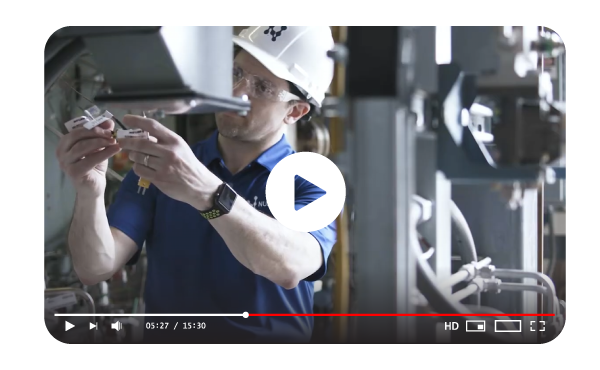
NuScale Test Facility Tours Video
Moving Forward Together
The tech industry and the nuclear sector must learn from one another. The nuclear industry can certainly benefit from the high-tech sector's drive for efficiency, advanced manufacturing, and digital innovation. Their urgent need for clean nuclear power has incentivized efforts to streamline the regulatory process. However, new reactor vendors also bear the responsibility of providing a technically defensible design, test data, and a transparent safety case so that the regulator can do its job expeditiously. Conversely, the high-tech sector must understand that when it comes to nuclear energy, safety cannot be an afterthought or a future update.
We must embrace a shared vision. By combining the innovative spirit of big tech with the unyielding safety culture of the nuclear industry, we can power the future of artificial intelligence cleanly and safely.