
What Does “Modular” Mean in Small Modular Reactors?
Introduction
When people hear the phrase “small modular reactor” (SMR), they often assume “modular” means a reactor arrives largely built in a factory, ready to be assembled on site. In reality, the term is broader than that.
In the SMR world, “modular” can refer to factory-made major components, modular construction methods, multi-unit plant design, or staged deployment over time. Not every SMR design uses all of these approaches, and not every SMR design offers a fully factory-fabricated reactor.
That distinction matters. To understand how the next generation of nuclear energy projects may be built and deployed, it helps to look more closely at what “modular” actually means.
A Plain-English Definition of Modular
Traditionally, nuclear power plants have been large, custom-built megaprojects. Much of the work was performed on site, with major systems assembled in the field over long construction schedules.
In the context of SMRs, “modular” generally refers to a shift away from fully custom, field-built construction toward more standardized components, repeatable plant layouts, and, in some cases, staged deployment.
A simple way to think about it is to compare it to homebuilding. Instead of cutting and assembling every part from scratch on a build site, a builder might use pre-cut frames, preassembled wall sections, or repeatable floor plans. The house still needs a foundation and on-site construction, but more of the work is standardized in advance.
That is the basic idea behind modularity in SMRs: not eliminating site work, but reducing custom field construction and increasing repeatability.
The Three Main Meanings of Modular
When people talk about modularity in small modular reactors, they are usually referring to one or more of three distinct ideas. Not every SMR design uses all three, and some designs emphasize one much more than the others.
Modular Manufacturing
For some developers, modular means major components of the reactor system and surrounding plant can be fabricated in a factory and then shipped to the project site. This is often described as modular manufacturing.
Factory fabrication can help improve quality control by moving more work into a controlled environment. It can also reduce exposure to weather delays and allow manufacturers to use specialized tools, repeatable processes, and trained production teams.
At the same time, modularity is a matter of degree. Even traditional large nuclear plants use some factory-fabricated components. One goal for many SMR developers is to increase the share of factory-fabricated components and reduce the amount of custom work required on site.
Modular Construction
In other cases, “modular” refers to the use of prefabricated sections, subassemblies, or repeatable construction blocks that are assembled at the site. This is modular construction.
Under this approach, significant site work, civil engineering, and plant assembly are still required. The difference is that the pieces being assembled may be larger, more integrated, and more standardized than in a conventional one-off project.
This is an important distinction: not all SMRs offer fully factory-fabricated reactors. Many offer modular construction instead, focusing on making on-site assembly more efficient and more repeatable.
Modular Deployment
Modularity can also describe how a plant is configured and expanded over time. This is modular deployment.
Some SMRs are designed as single-module plants, while others are designed around multiple reactor modules on one site. In some cases, this can allow owners to add capacity in stages rather than building all planned output at once.
That means modularity is not only about manufacturing or construction. It can also describe a plant design that supports phased growth and more flexible capacity planning.
The Benefits of Modularity
Engineers and developers are interested in modularity because it offers several potential advantages over traditional custom-built megaprojects.
- Modularity supports greater standardization. When the same components or layouts are used repeatedly, teams can improve manufacturing processes, reduce variation, and build experience more quickly.
- Modularity may improve schedule predictability. Large construction projects often face delays from site conditions, weather, labor constraints, or project complexity. Shifting more work into factories or using prefabricated assemblies may help reduce some of that uncertainty.
- Modularity can reduce the amount of labor-intensive work that must be performed on site. If more of the plant is built or integrated elsewhere, fewer tasks must be completed in the field.
- Modular deployment can support phased capital investment. Rather than building all capacity at once, some projects may be able to add capacity in stages, allowing investment to align more closely with demand growth.
These are important advantages of modularity and key reasons SMR developers are pursuing more standardized, repeatable approaches.
What Modularity Does Not Mean
Because the term is often used loosely, it helps to be equally clear about what modularity does not mean.
-
Not every SMR is built in a factory. For some designs, modularity refers to major components, construction sections, or repeatable plant units rather than a fully factory-fabricated reactor.
-
Modularity does not eliminate the need for site preparation. SMR projects still require licensing, civil works, foundations, infrastructure, and careful assembly at the project site.
-
Not all SMR designs use the same technology or project model. The SMR landscape includes a wide range of reactor designs, cooling methods, sizes, and deployment strategies.
In other words, modularity is best understood as a design and construction philosophy, not a single fixed formula.
Where NuScale Fits into the Modular Picture
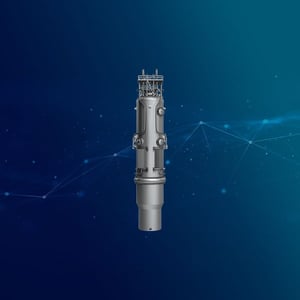
NuScale’s approach emphasizes standardized reactor modules and a high degree of factory fabrication before shipment to site. Its NuScale Power Module™ integrates the reactor and steam generator into a single unit, reflecting a highly integrated approach to modular design.
NuScale’s design also uses a multi-module plant concept. A NuScale SMR-powered plant can house up to 12 modules in a shared pool, allowing a project to scale capacity based on customer or community needs. NuScale has also completed a Standard Plant Design, providing a generic plant configuration that can serve as the starting point for site-specific deployment.
This emphasis on scalability is an important part of NuScale’s modular approach. Rather than requiring all capacity to be deployed at once, a NuScale-powered plant can be configured to align with different market needs, site requirements, and growth timelines. That flexibility helps illustrate how modularity can support a more phased and adaptable approach to plant deployment.
NuScale’s SMR design illustrates how modular manufacturing, modular construction, and modular deployment can work together in one design approach. At the same time, other SMR developers may pursue different levels of factory fabrication, different plant layouts, or different deployment models.
Conclusion
In small modular reactors, “modular” refers to how designers may standardize manufacturing, construction, and deployment.
Depending on the design, modularity may describe factory-made major components, prefabricated construction sections, multi-unit plant layouts, staged deployment, or some combination of the three.
Not all SMRs are fully factory-fabricated, but they do all require thoughtful engineering, site preparation, and assembly. By shifting more work toward standardization and repeatability, modularity aims to make nuclear projects more flexible and more predictable than traditional one-off builds.
NuScale represents one highly integrated, scalable example within a much broader and more varied SMR landscape. Understanding that nuance helps set clearer expectations for what “modular” really means in the next generation of nuclear energy.